

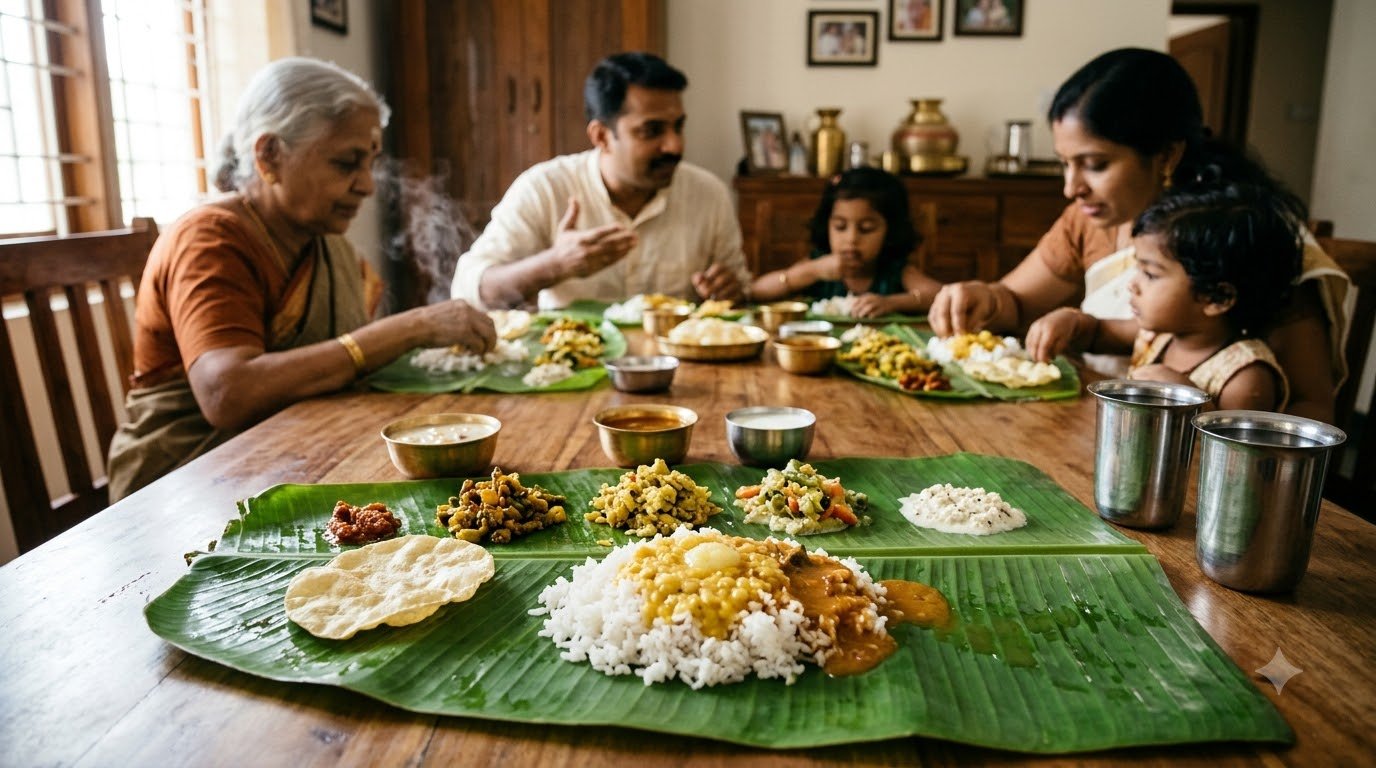
Serving a meal on a banana leaf is not just a quaint custom, it is practically a sensor ritual, across the South India, parts of Southeast Asia, and also many other tropical regions. The deep green colour of the lead, the slightly shiny surface because of its wax, along with the subtle aroma it releases once hot food touches it, all of it adds something different to the taste, which a regular plate simple cannot replicate. But, the question arises where does this tradition actually comes from, and is there any real substance involved in it, which claims that it is healthier?
A Practice Rooted in Both Culture and Practicality
Banana leaves are large, flexible, and waterproof, and they impart an aroma to food cooked in or served on them, steaming with banana leaves adds a subtle, sweet flavor and fragrance to the dish. Beyond taste, the leaves also help keep juices in and protect food from burning, much like foil does, which explains why so many traditional recipes rely on them for both cooking and serving.
Culturally, the banana leaf carries deep significance. In many traditions, foods thought to be simple, fresh, and nourishing are served on banana leaves during festivals, fast breaking meals, and ceremonies. One of the most well known examples of this is Kerala’s traditional banquet: the ‘sadya’ is a traditional vegetarian meal served on a banana leaf during weddings, festivals, and other special occasions, with all dishes served on the leaf and eaten by hand.
ALSO READ: Gym On An Empty Stomach? Here’s Why Fruits Could Be Your Best Fuel
The Popular Health Claims
Ask anyone who grew up eating off banana leaves, and they will likely tell you it is healthier, and there’s a widely repeated explanation for why. Banana leaves are said to be a source of flavonoids, polyphenols, saponins, and tannins that are released when hot food is cooked in them, which contributes to their medicinal value and makes them hygienic to use.
Some sources go further, pointing to specific compounds: the leaves contain an enzyme called polyphenol oxidase that produces L DOPA, which counteracts the action of free radicals and has even been studied in relation to Parkinson’s disease treatment. Studies in animal models have also shown banana leaves to be a good source of rutin, which modulates glucose balance and is considered a candidate for anti diabetic drug development.
What Does the Science Actually Say?
Here’s where it gets more nuanced. While the traditional and folk medicine claims are widespread, more clinically cautious sources push back on how directly these benefits apply to everyday eating. While banana plant leaves contain phytochemicals in lab studies, there is no strong clinical evidence that eating food off banana leaves provides meaningful amounts of these compounds or leads to specific health benefits in people.
In other words: tradition and regional culinary practices value banana leaves for serving and cooking, contributing to mindful eating and community rituals, but science has not yet produced strong, direct clinical evidence that banana leaf plates or wraps produce specific health benefits in humans.
Beyond Health: The Practical and Environmental Case
Even setting aside the debated health claims, banana leaves hold up well on practicality alone. Eating on a banana leaf is one of the most eco-friendly, discardable food serving arrangements available, and cleanup couldn’t be simpler, a simple sprinkling of water is enough to clean a banana leaf before or after use.
Why this tradition has continued for hundreds of years, is because of the mix of eco friendliness, value for culture, and the healthy and pleasant experience of eating on the banana leaves. According to research banana leaves are considered to be one of the simplest and most elegant way to serve food.
ALSO READ: Common Fridge Mistakes: Foods That Taste Better Outside The Refrigerator
The Final Verdict: What the Blogger has to say about it?
Even if by scientific studies, the health benefits of banana leaves are not proven, still in food culture the importance is clear. These are used to add natural touch to food, in Indian traditional ceremonies, are an alternative for the plates plates, which is eco friendly. Banana leave is combination, which brings taste, tradition, and sustainability, and some health benefits all if it together.
FAQs
- Should banana leaves be washed before serving food in it?
Yes, banana leaves should be washed before serving food to remove dust or any other impurities. - Can banana leaves be reused after serving food on it?
No, it cannot be reused again and are made for single use, as it very hygienic when it comes to leftover food point.
Read More Such Articles On Lifestyle Mantra: CLICK MORE