

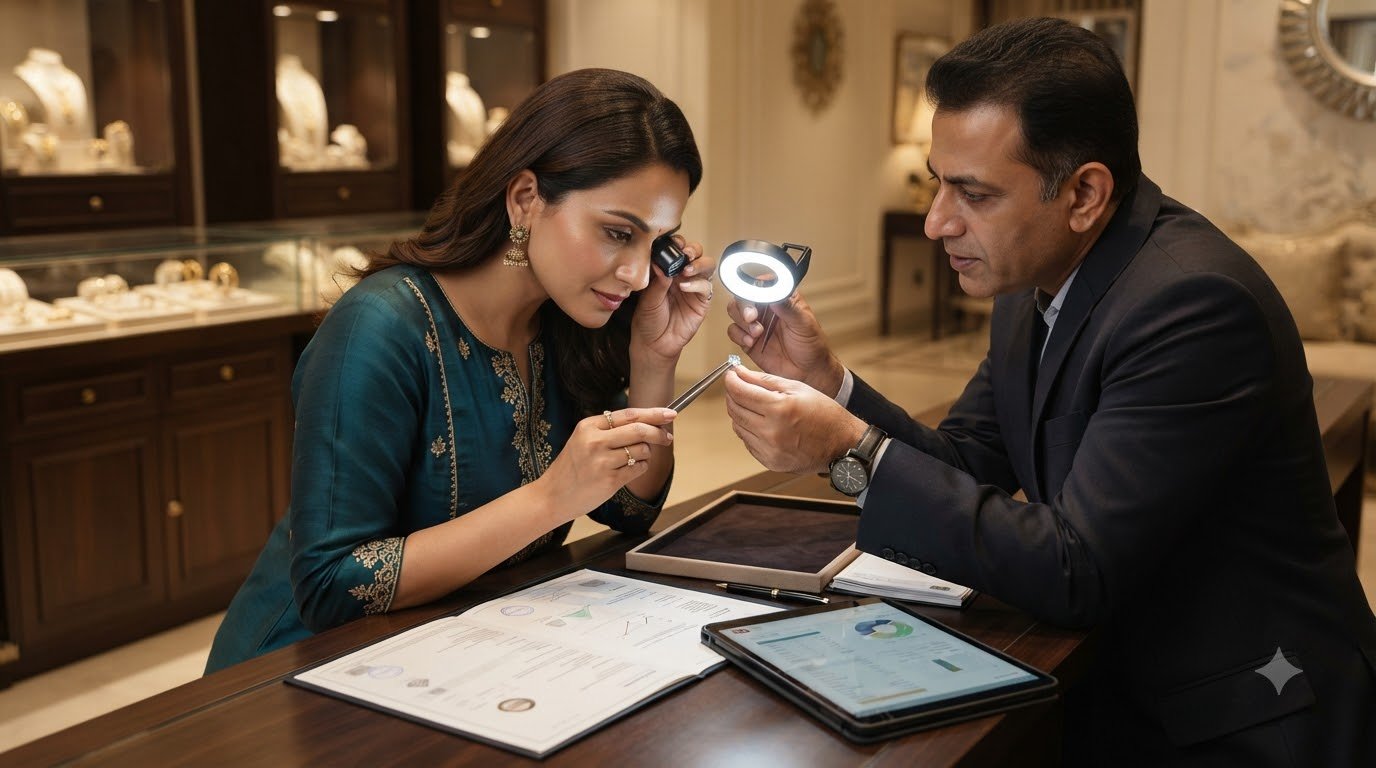
Person buying a lab grown diamond for the first time can feel overwhelming. First time Byers often get confused between the terms like career, clarity, cut, VVS, VS, and fluorescence, and one can especially get confused when two diamonds that look identical comes in front of them that carries very different price tags. The good part about it is that one does not need to have a deep expertise to make a smart purchase. For it one needs to have just a clear understanding for a few essentials.
1. Don’t Judge a Diamond by Size Alone
Carat weight simply tells you how much a diamond weighs, not how good its quality is. A larger stone isn’t automatically a better one. Instead of chasing the biggest size within budget, focus on overall stone quality. For lab grown diamonds, staying within the VVS (Very Very Slightly Included) to VS (Very Slightly Included) clarity range is generally recommended, since going lower isn’t necessary given how accessible this category has become.
2. Pay Attention to Fluorescence and Tinges
Fluorescence refers to how a diamond reacts under ultraviolet light, and it can affect appearance. It’s also worth checking for any black, green, or milky tinges, as these can alter how the stone looks under different lighting conditions. Working with a jeweller who is willing to personally select a stone rather than just showing pre-stocked options, often leads to a better outcome.
3. Understand the Grading Report
A diamond grading report acts like a report card for the stone, detailing carat weight, color, clarity, cut, and fluorescence. Crucially, it should clearly state that the diamond is lab grown, along with its growth method and any treatments applied. However, remember that a report alone can’t fully capture how a diamond will look to the naked eye, cut and polish differences can make two similarly-rated diamonds appear noticeably different in person.
4. Know Why Lab-Grown Diamonds Cost Less
The price difference comes down to production. Mined diamonds involve extracting a naturally limited resource, while lab grown diamonds are created in controlled environments where production can scale. This affordability reflects origin and supply not inferior quality or authenticity.
5. Compare More Than Just Carat Weight
Two diamonds with identical carat weight can still differ significantly in color, clarity, cut, or fluorescence. Comparing diamonds side by side, rather than relying on carat weight alone, gives a far more accurate picture of quality and appearance.
6. Set Realistic Resale Expectations
Lab grown diamonds shouldn’t be viewed as investments with guaranteed resale value. Since this is a rapidly evolving category with shifting global pricing, it’s wise to check a jeweller’s exchange, buyback, and upgrade policies in advance, and keep your grading report and invoice safe for any future resale or exchange needs.
7. Watch for Red Flags
Be cautious of sellers who can’t provide a credible grading report, avoid disclosing that a stone is lab-grown, or discourage independent verification. Vague return policies and pressure to purchase without proper comparison are also warning signs worth taking seriously.
Don’t Forget the Additional Costs
The diamond itself is only part of the final bill. Metal type, making charges, setting costs, taxes, and potential resizing or repair fees can all add to the total price. A clear, itemized quotation makes it much easier to compare options and understand exactly what you’re paying for.
Read More Such Articles On Lifestyle Mantra: CLICK MORE