

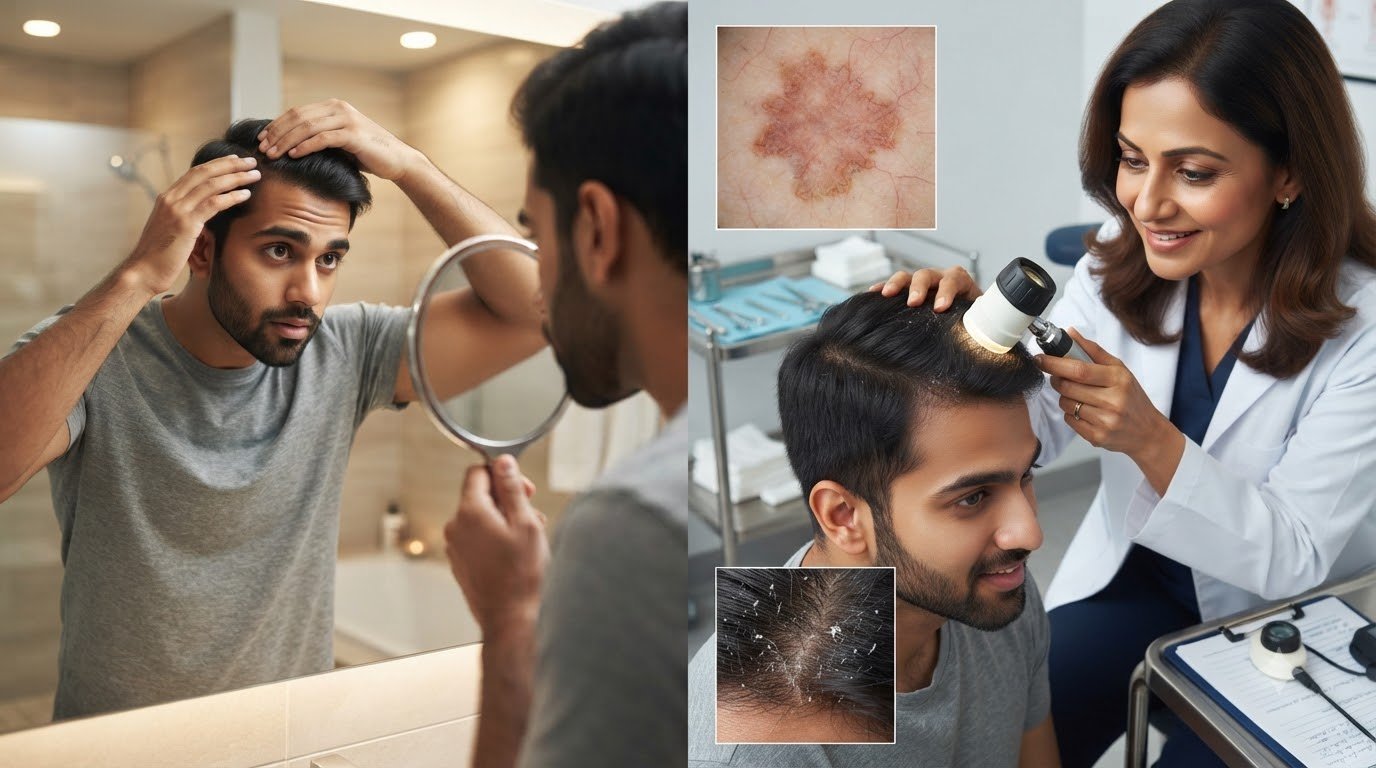
A flaky or itchy scalp is usually linked to common problems such as dandruff or dry skin. However, some unusual changes on the scalp may need closer attention, especially when they do not go away or keep returning.
Skin cancer can develop on the scalp, but it may remain unnoticed because hair can cover the affected area. People with thinning hair or bald patches may need to be especially careful because more of the scalp is exposed to sunlight.
Scalp Changes That Should Not Be Ignored
Skin cancer does not always appear as a noticeable lump. In some cases, it can look like a rough, scaly or crusty patch. This can easily be confused with dandruff or an irritated scalp.
A sore that does not heal, heals and then comes back, or starts bleeding can also be a warning sign. Other changes may include a new bump, a firm red growth, a thickened patch of skin or an area that becomes painful or tender.
However, these symptoms do not automatically mean someone has skin cancer. Conditions such as dandruff, psoriasis and folliculitis can also cause itching, scaling and bumps. The bigger concern is a change that stays for a long time or repeatedly returns.
ALSO READ: Your Body Is Trying To Tell You Something: 5 Warning Signs You Must Not Ignore
Keep An Eye On Moles
Melanoma can also develop on the scalp. It may appear as a new dark spot or a mole that starts changing.
The ABCDE method can help people monitor unusual moles. A stands for asymmetry, B refers to an uneven border, C means changes in colour, D refers to diameter and E stands for evolving, meaning the spot changes in size, shape or appearance.
A mole that looks very different from the others around it may also deserve attention. This is sometimes called the “ugly duckling” sign.
Why Thinning Hair Can Increase Risk
Sun exposure is one of the main causes of skin cancer. Hair provides some natural coverage, but people with thinning or absent hair have more exposed skin on the scalp.
Regular sun exposure matters too. It is not limited to long days at the beach. Spending time outdoors without adequate protection can also expose the scalp to ultraviolet radiation.
How To Protect Your Scalp
Checking the scalp regularly can make it easier to notice unusual changes. People can use a comb to separate their hair and inspect areas that are difficult to see. A mirror or help from another person can also make the check easier.
People with exposed or thinning scalps can use sunscreen and wear a hat that provides good coverage when spending time outdoors. The ears and neck should also be checked regularly.
If a sore, crusty patch, unusual growth or changing mole does not disappear, it is best to have it examined by a doctor or dermatologist. A medical professional can decide whether further testing, including a biopsy, is needed.
Most scalp changes are not cancer. Still, assuming a persistent or unusual change is simply dandruff could delay proper diagnosis. Paying attention to changes and getting them checked when needed can help protect scalp health.
Read More Such Articles On Lifestyle Mantra: CLICK MORE